


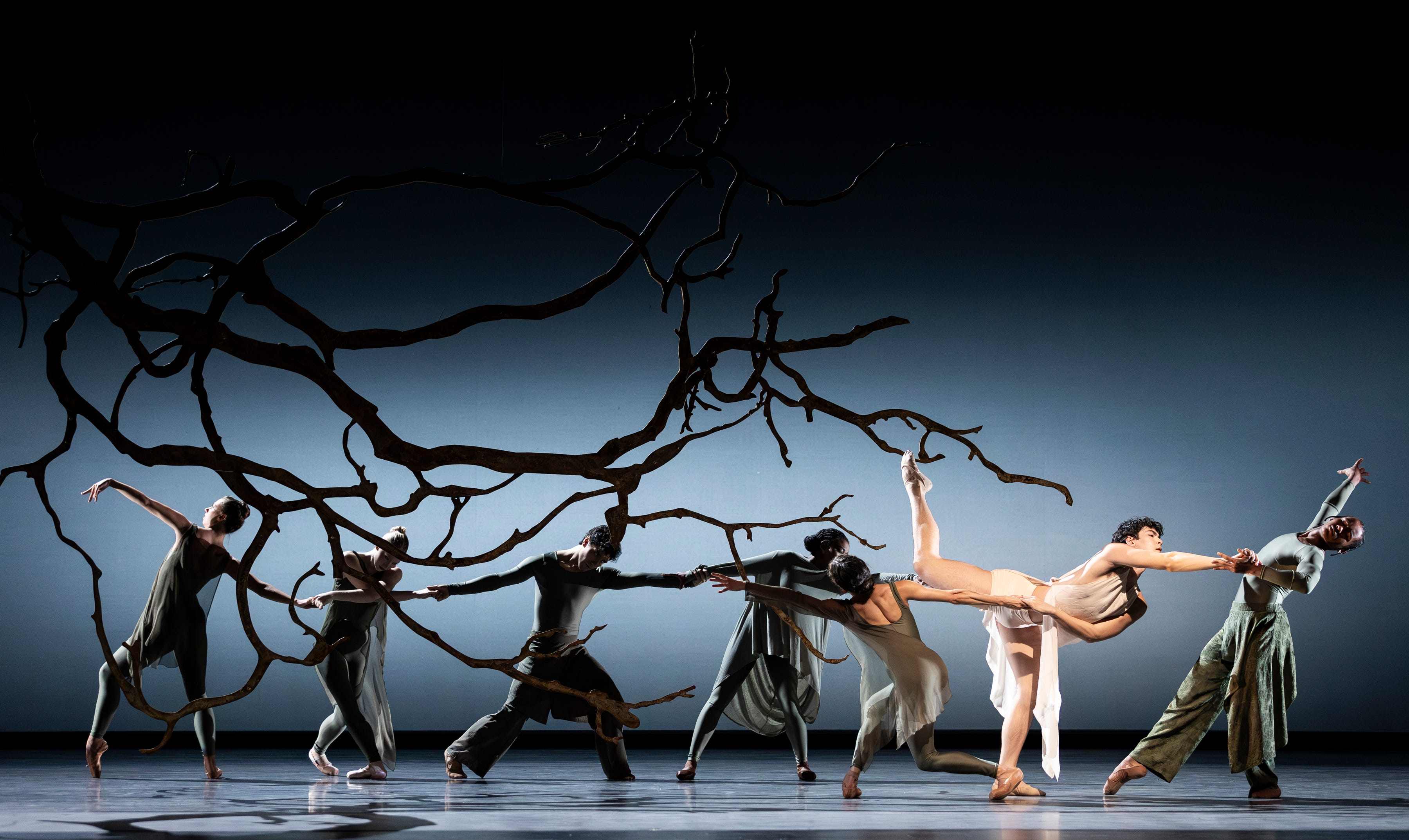
In mid-September I attended one of the opening performances of Black Wave, choreographer Jessica Lang’s first work as Pacific Northwest Ballet’s new choreographer in residence. I wrote about it here, then spent the following ten days thinking about the dance, a rumination on mental illness and the ancient Japanese practice of Kintsugi, repairing beautiful broken ceramics with gold lacquer, and in the process creating something new and equally beautiful.
That popped into my head this weekend as I watched the new documentary film Will and Harper, about comedian Will Ferrell and his friend Harper Steele, who recently came out to her old friends as a trans woman. In the film, Will and Harper take a road trip and, among many other topics, Harper explores what it feels like to navigate the world as a woman. It’s a beautiful movie and although it isn’t directly about mental health, Harper does talk to Will about years of hiding her true identity and what that deception did to her. Lang’s ballet doesn’t directly address gender identity, but she has created an artwork whose roles could, and were, cast gender fluid.
I thought about Harper Steele this weekend as I watched PNB soloist Chris D’Ariano, a man, perform the role I’d seen his colleague Leah Terada, a woman, tackle the week before. The cast also included two other self-identifying women in roles self-identifying men had danced opening weekend. While every dancer was more than merely competent, the casting did get me thinking about what we expect of different genders, and wondering whether or not somebody of my generation will ever be able to fully release old, worn out expectations of how genders have traditionally expressed themselves.
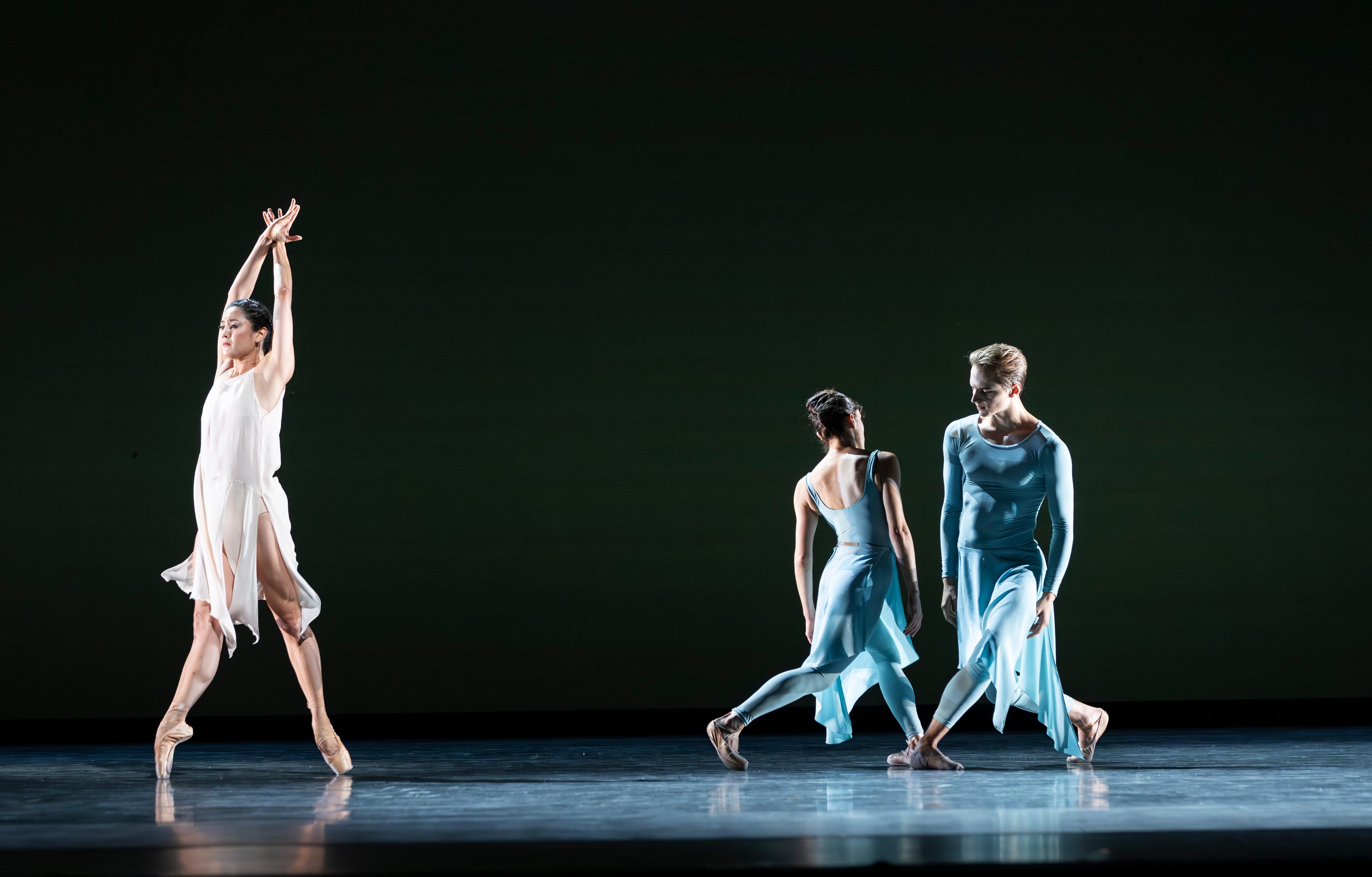
Black Wave isn’t a traditional ballet romance with opposite genders falling in love, so it didn’t seem particularly momentous that people of different genders would swap roles; even the beautiful costumes designed by Jillian Lewis are androgynous. But, as I said, outward-facing gender representation was on my mind, and watching D’Ariano and his colleagues in this dance had me thinking about more than the fluidity of the casting.
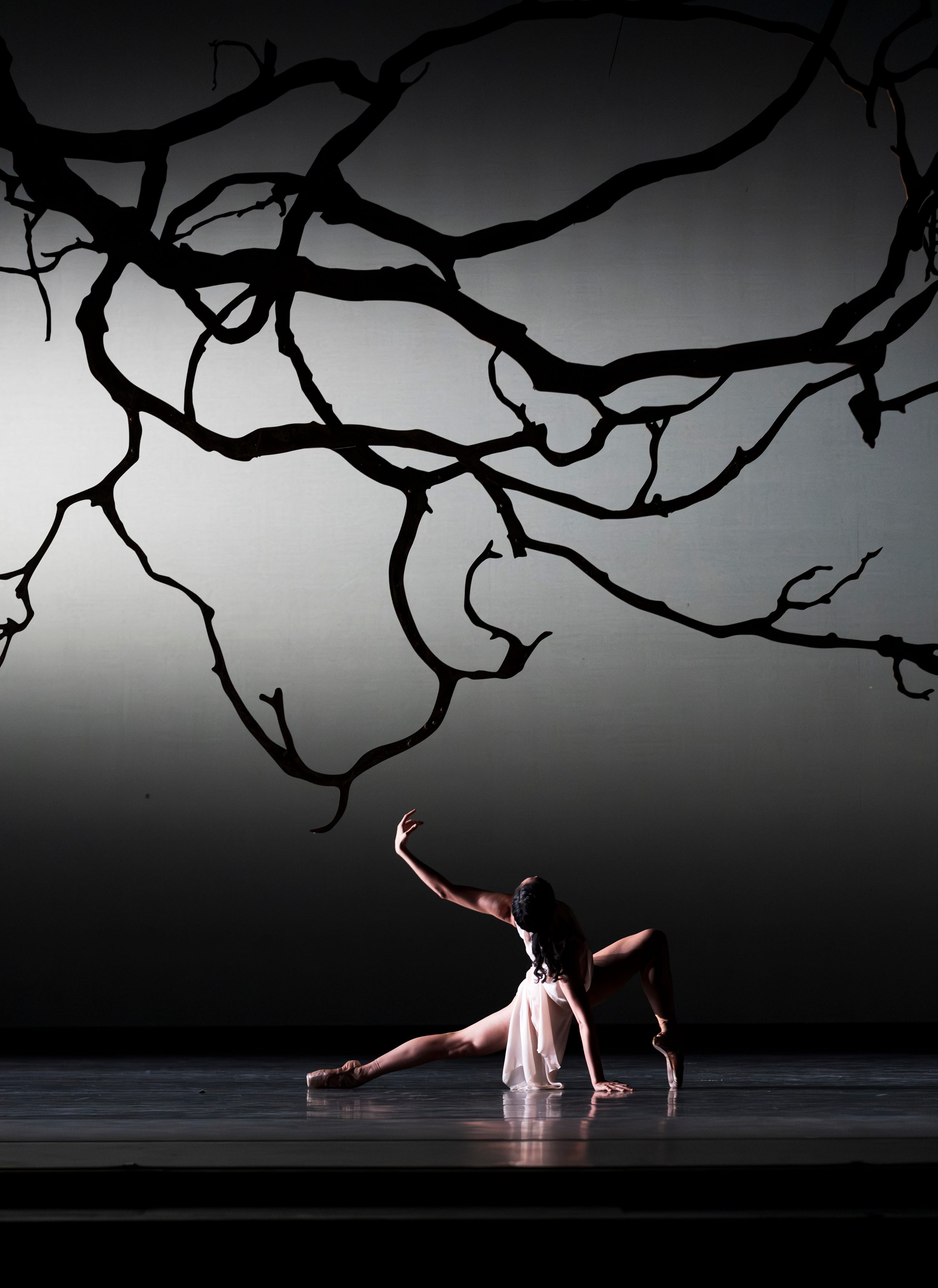
Both D’Ariano and Terada are among my favorite PNB dancers. Both company soloists are equally at home with classical ballet and contemporary work. Terada’s opening weekend performances were emotionally gripping, tender and ephemeral. D’Ariano, taller and more muscular than Terada, didn’t deliver the same kind of seemingly weightless performance as hers. But his sharply etched movements carried definitive heft and a sadness that had me thinking about the role he performed, who I call “the dancer in white.”
In each dancer’s performances, I saw how Lang’s choreography provided room for an artist to put themselves into the dance, Terada wore pointe shoes, D’Ariano did not, so there was a notable difference in the mechanics of how each used their bodies. I have never danced en pointe but I know a dancer uses their leg muscles differently when they balance on their toes. I thought of how Harper Steele wore shoes with high heels with her skirts and how we use our muscles differently when we wear them, trying to balance with more weight on the front of our feet. In the film, Steele wasn’t trying to mimic a woman, she was simply trying to be herself. But donning a different type of shoes shifted how she felt in her body, and how that body was seen by different audiences.
Gender isn’t a new issue for PNB, which boasts two openly non-binary dancers among its ranks, one of whom predominantly performs in pointe shoe roles. As PNB continues to move into a less gender-stereotyped future, one that just as easily casts Elle Macy and Angelica Generosa or Dylan Wald and Leta Biasucci in the same roles, I wonder how that might affect a ballet student’s curriculum? Will all students be offered the choice to learn to dance in pointe shoes? Will a non-binary dancer be cast in the title role in a 19th century ballet like Giselle? I’m not certain how long it will take to shift a Titanic-sized culture like classical ballet. *(PNB says any student who requests pointe classes can take them, and it is currently teaching the leading pointe role in Sleeping Beauty to at least one non-binary dancer).*
Which leads me back to Harper Steele in Will and Harper. Steele spent most of her life living openly as a cis man. Now, in her 60’s, she has transitioned to a female, but her body’s learned vocabulary is male. If she were growing up now, would she have more opportunities to learn to wear heels and skirts?
I think I’m raising more questions about the future than I am writing about Black Wave in 2024. But I have to thank Jessica Lang for creating a work that has me digging deeply into topics other than turnouts or jumps. I do know that watching the very last scene of this ballet, with the dancer in white at the center of a circle of dancers lying on their sides, it didn’t matter whether it was Leah Terada and her delicate beauty, or Chris D’Ariano twisting like a sapling in a heavy wind; each was moving in their own way and each brought an individual sense of beauty and emotion.
Which brings me back to the Kintsugi tradition: we’re filling the cracks in broken pottery with a golden lacquer, creating works of equal, but different beauty here. I found myself thinking about a future when I won’t categorize or define what I’m seeing by the gender of who is doing the dancing., but by a more universal standard of beauty. Jessica Lang will be PNB’s choreographer-in-residence for three seasons. I look forward to the challenges she’ll continue to bring our way.
***NOTE: I have no answers, only questions and tiny fragments of answers. Who are we, how do we see ourselves in the world, how does that change our possible future? And how can art help us contemplate our choices?***