

Sorry Timmy
Pretty sure ballet is here to stay

When Pacific Northwest Ballet’s (PNB) artistic director Peter Boal was finalizing his current artistic season, he had no way of knowing that award-winning actor Timothée Chalamet would ignite an international brouhaha about ballet and opera.
But Boal’s March 2026 program, Firebird, might have been crafted with Chalamet’s dismissal of the classic art forms in mind.
If you have no clue what I’m referring to, let me recap as concisely as possible.
On February 24, 2026, in a Variety and CNN Town Hall conversation with actor Matthew McConaughey, Chalamet dismissed both opera and ballet as art forms that require too much energy to keep alive, that they’re relics of the past. He sparked a maelstrom of clapback from artists, arts organizations and audiences.
While Boal never publicly acknowledged Chalamet’s recent dispersions, it’s true that organizations like PNB and Seattle Opera struggle to put butts into the seats of their shared performance venue, Marion Oliver McCaw Hall. The reasons are too numerous to discuss in this one ballet review, but the insinuation that ballet and opera have no significance to today’s young audiences is the least of their challenges.
Suffice it to say that PNB’s latest program gives audiences a variety of offerings that only graze the surface of what contemporary and traditional ballet can be. You could call it a tasty buffet that will leave you wanting more.
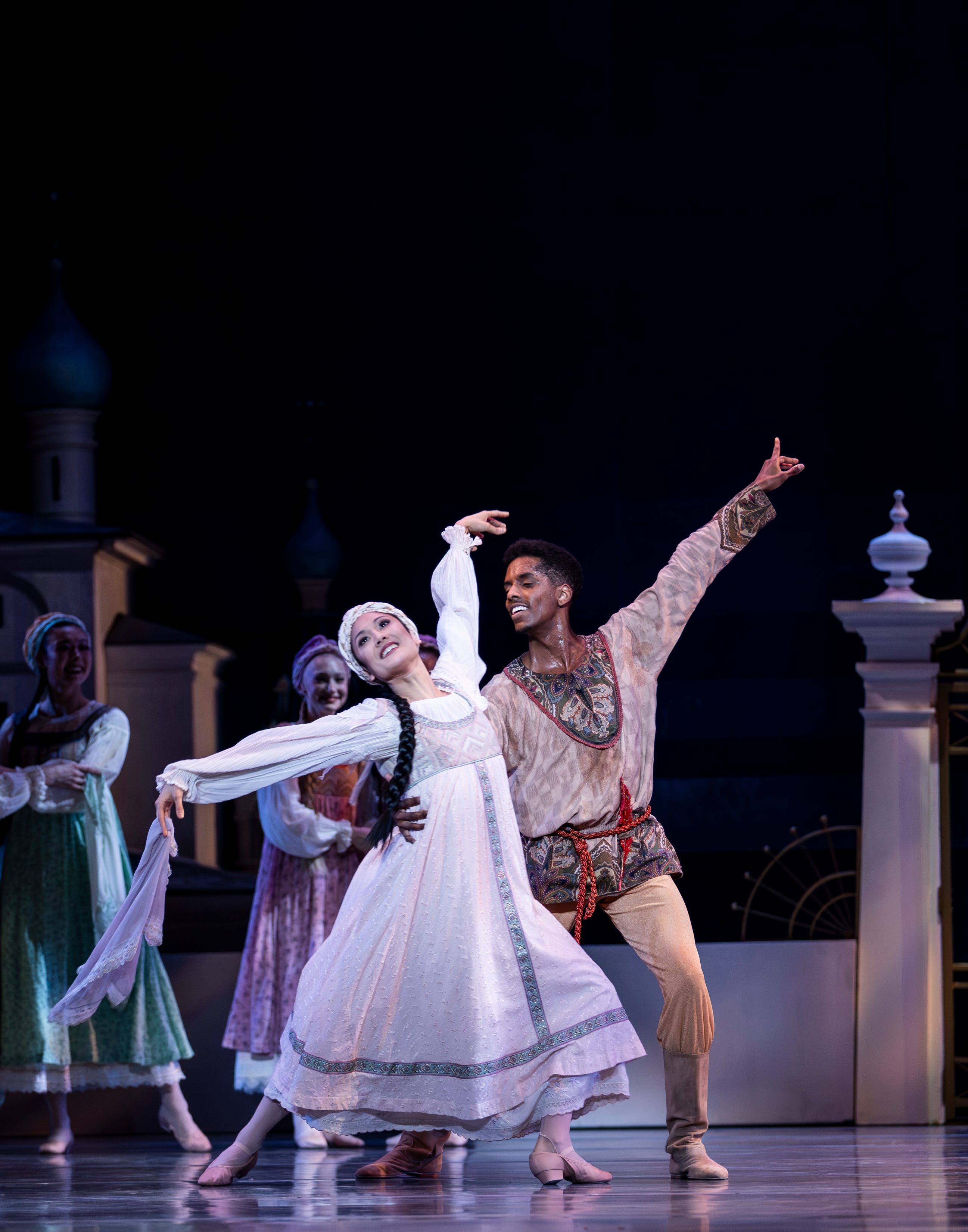
The program’s name, Firebird, refers to the one-act ballet set to a score by Igor Stravinsky. The original performance was created in 1910 in Paris for Sergei Diaghilev’s Ballets Russes. The story of a magic bird who saves a royal life has had a number of incarnations since then.
PNB’s Firebird was choreographed in 1989 by former founding artistic director Kent Stowell, and comprises the full second act of the current PNB program.
It’s kind of a mini story ballet complete with lush sets and costumes and not too much story.
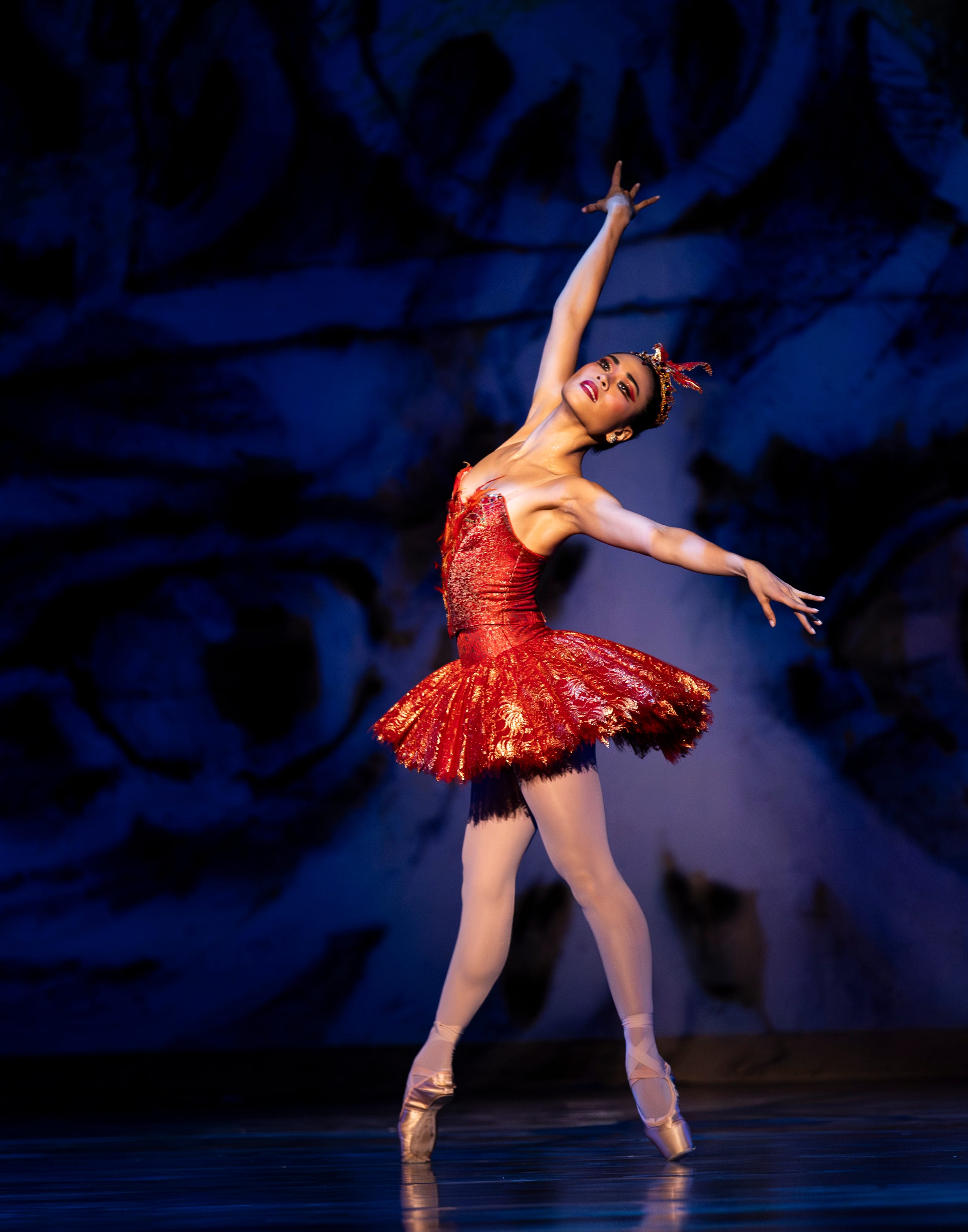
On opening night principal dancer Angelica Generosa was a stunning Firebird dancing with principal Jonathan Batista’s besotted Prince Ivan. I am pretty sure the young child sitting in front of me at a matinee performance the next day was equally besotted by the fiercely graceful bird.
PNB’s Firebird, on hiatus for the last couple of decades, was a stark contrast to the two short dances that preceded it in Act 1.
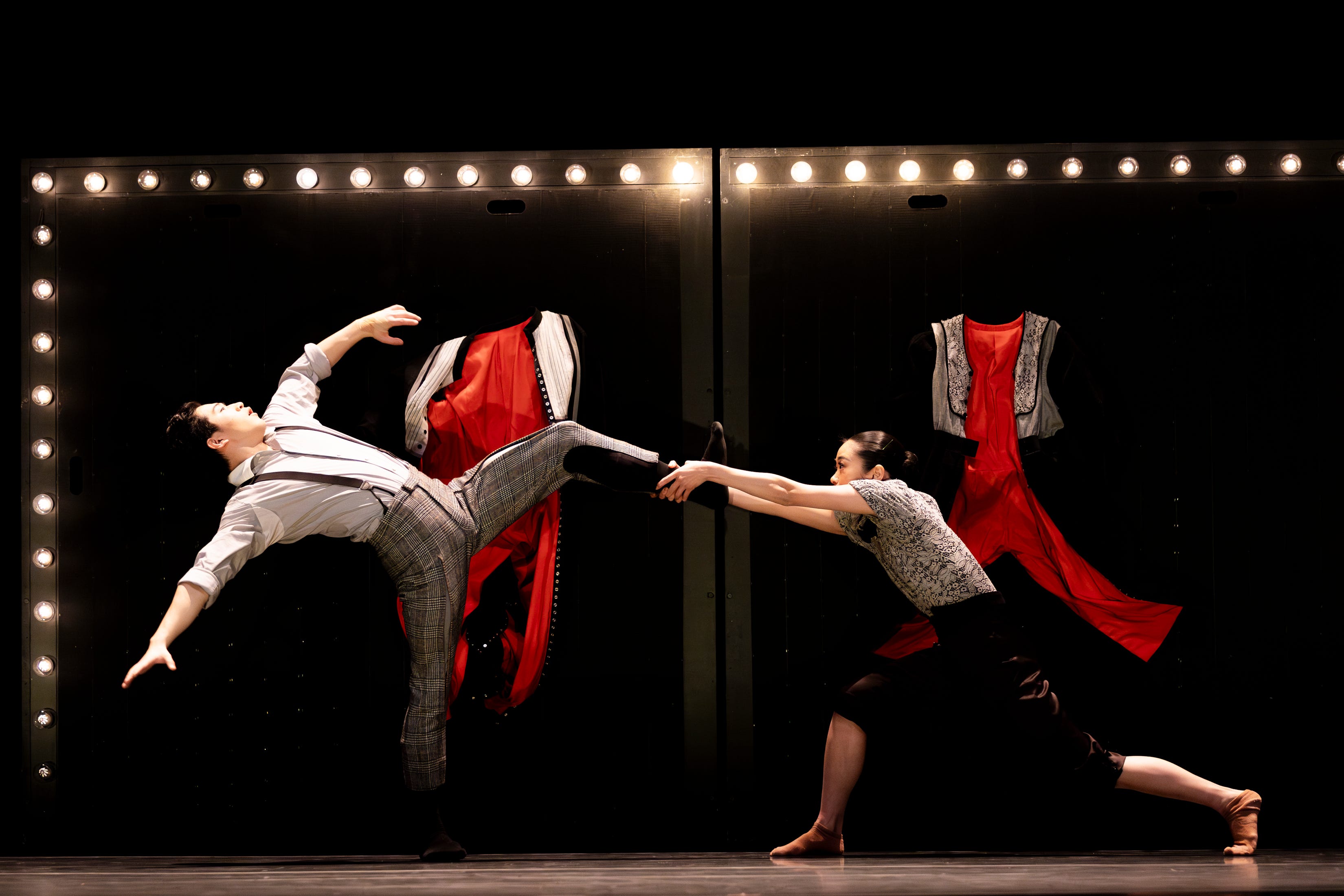
The show begins with Alejandro Cerrudo’s Little mortal jump. The ballet was originally created for Hubbard Street Dance in 2012 and had its PNB premiere in 2016. What starts as a quirky and amusing series of sketches evolves into a rumination on the transitory nature of life and love. I had just lost a dear friend before I saw the ballet 10 years ago, and I’m still moved to tears when I watch it now.
Little mortal jump may start off quirkily, but it slowly evolves into a more serious exploration of life. It features several duets, interspersed with sections featuring the full ten-member cast. By the time it reaches its final duet, two dancers who seem to move in slow motion into a light shining from the wings, I’d almost forgotten the quirkiness.
On opening night we were treated to retiring principal Elizabeth Murphy paired with fellow principal Dylan Wald who’s just returning from a surgery. I saw them together in 2016 and this was a fitting capper to their time together at PNB. Their roles the next afternoon were danced by Wald’s offstage wife Elle Macy, also recovering from a serious injury, with partner and soloist Luther DeMyer. Both couples were mesmerizing. The final full cast section that blends into a series of spinning cubes that seem to echo the dancers’ spins pushed me to reflect on life’s transitory nature.
While this may not be every balletomane’s cup of tea, I loved Little mortal jump 10 years ago and still get goose bumps when I watch it today. It reminds us to live life to the fullest while we can. The older I get, the more I embrace that as a mantra.
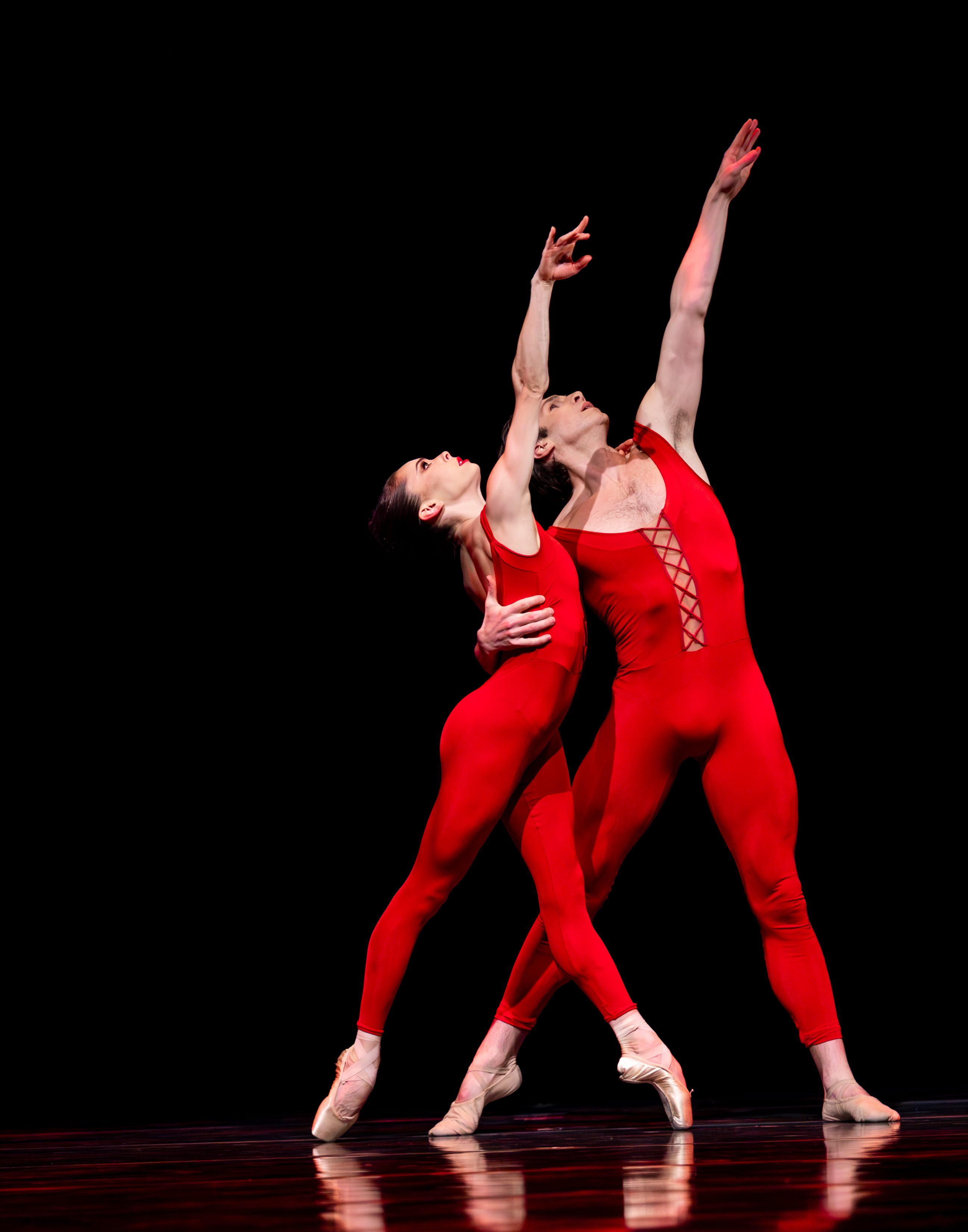
After a brief pause, the late choreographer Ulysses Dove’s quartet Red Angels, art inspired by the AIDS epidemic of the late 20th century, has a completely different take on humanity. A friend commented casually that it was a product of its time. That may be true but watching the two couples display the precision and technical prowess Dove demands of his dancers is truly fascinating.
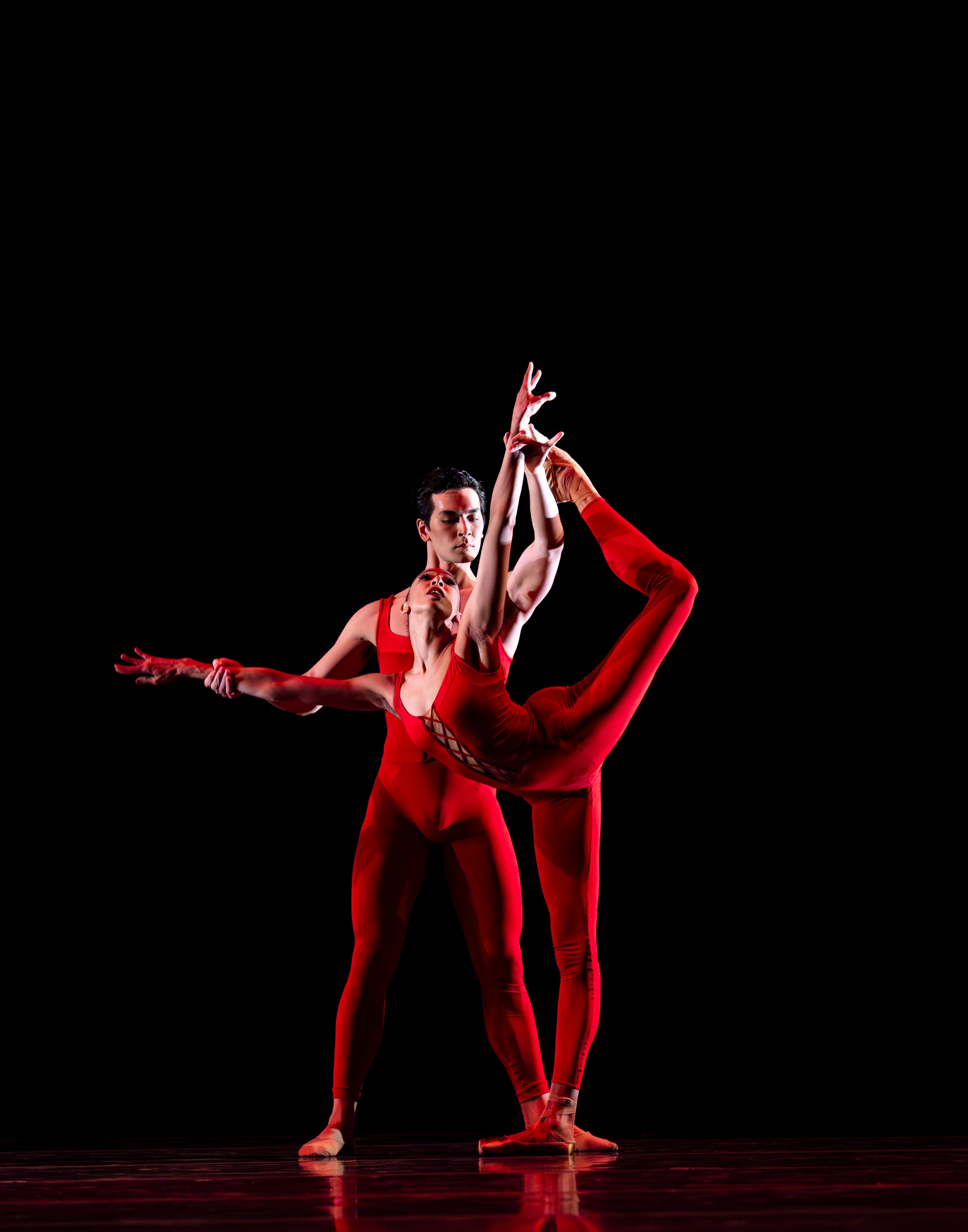
On opening night retiring PNB veteran Lucien Postlewaite and his partner Clara Ruf Maldonado, making her Red Angels debut, matched one another step for step, while soloist Amanda Morgan and the wonderful Christopher D’Ariano were equally well paired. D’Ariano, like Postlewaite, is as adept with Dove as he is with a traditional story ballet prince. I’ve seen Red Angels a number of times since PNB introduced it to Seattle audiences in 2005. For me, the choreography is most successful when the dancers emphasize precision and technical prowess and let their emotional sides take a back seat. I feel that the strength of Dove’s message is in how the four dancers inhabit the choreography.
The four opening night dancers were flawless, but I have to mention the Saturday matinee pairing of Jonathan Batista and new soloist Ashton Edwards. They nailed the ballet. Last minute replacements Noah Martzall and Juliet Prine were competent but less effective in this ballet.
What struck me most about the Firebird program as a whole was watching the generational transitions underway at PNB. Yes, it’s bittersweet to say goodbye to veterans Postlewaite and Murphy, but the company has a battery of amazing young dancers stepping into their roles. It belies Chalamet’s offhand comments about an art form that has outlasted its vitality.
Watching Morgan and D’Ariano in Red Angels and celebrating the performance returns of what I’d call the new veterans — Elle Macy, Leah Terada and Dylan Wald — plus rising stars Noah Martzall, Larry Lancaster and the luminous Destiny Wimpye and a battery of their peers, I can’t help but be optimistic for ballet’s future.
You can catch PNB’s Firebird program this weekend, March 20-22, at Marian Oliver McCaw Hall.