

Living
And dying.

I’m sure you’ve heard the old saw — nothing in life is certain except death and taxes.
I’ve been thinking of both this week — actually since the end of last year when my 94-year-old mother died.
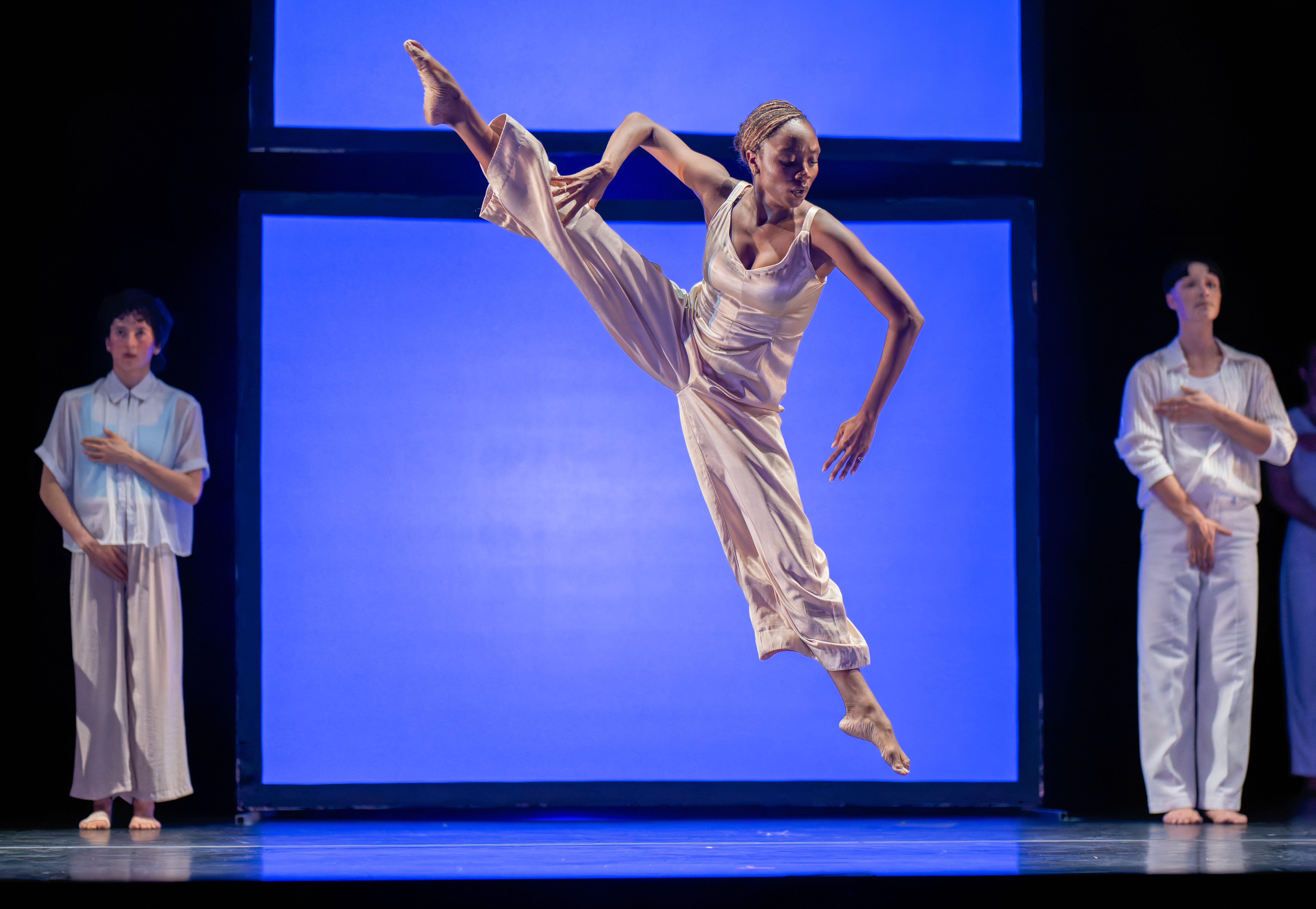
The old adage came to mind again last week while I sat in the audience at Meany Hall on the University of Washington’s Seattle campus. I was watching Bill T. Jones/Arnie Zane’s dance company perform a revival of a 32-year-old dance piece called Still/Here based on a series of recorded workshops with people who had been diagnosed with terminal illnesses.
Docu-artworks aren’t uncommon these days, although I get the sense that this piece was much more controversial at its premiere. (More about that in a second.)
In the revamped performance the 10 company members, initially clad in white, then in shades of red in Act 2, began by voicing the words of the original attendees at Jones’ series of workshops. Workshop participants were of all ages, genders and races, and through the long performance they appear in video and audio recordings as well as in still photos. Their words inspired Jones’ choreography and the music the audience sees and hears.
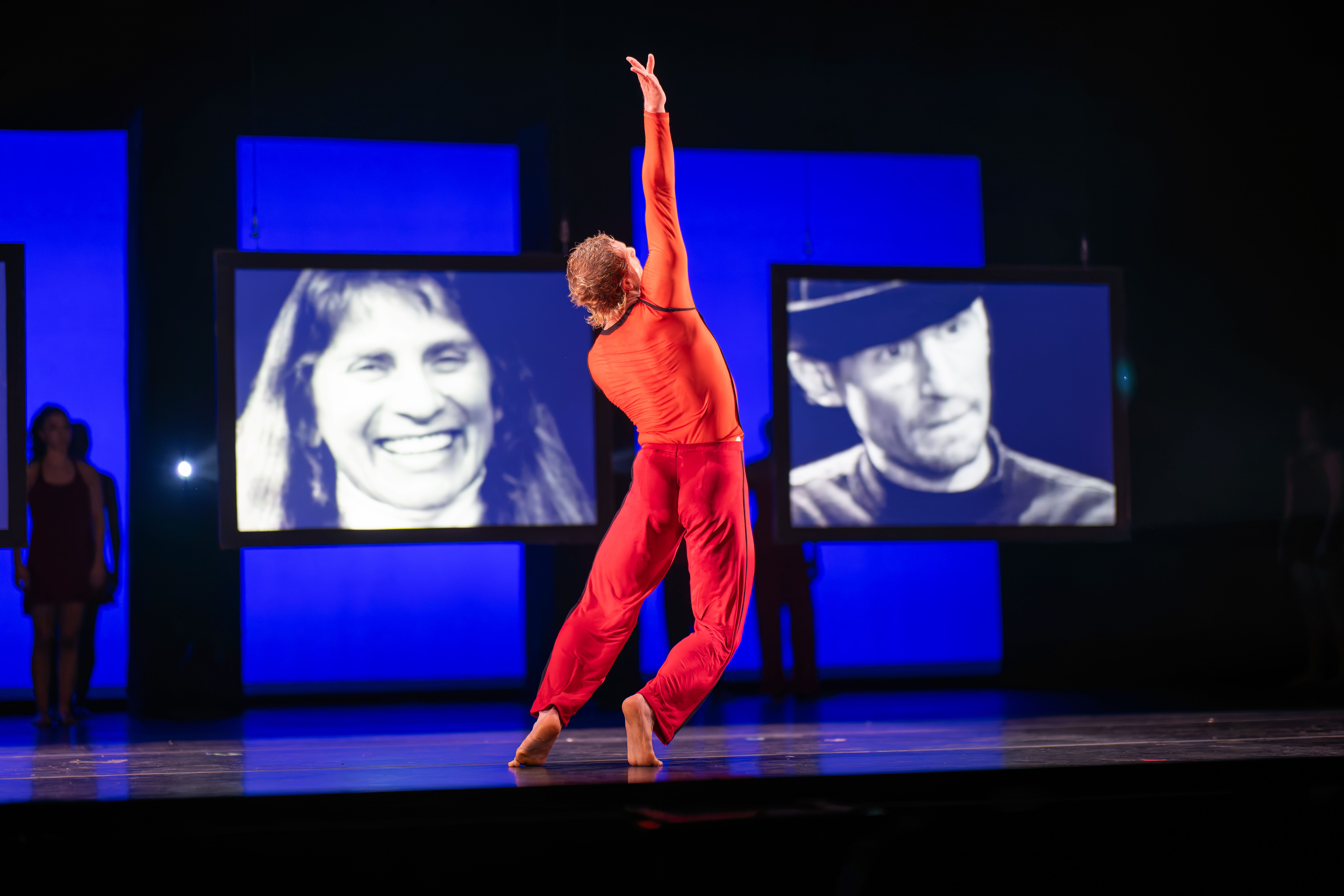
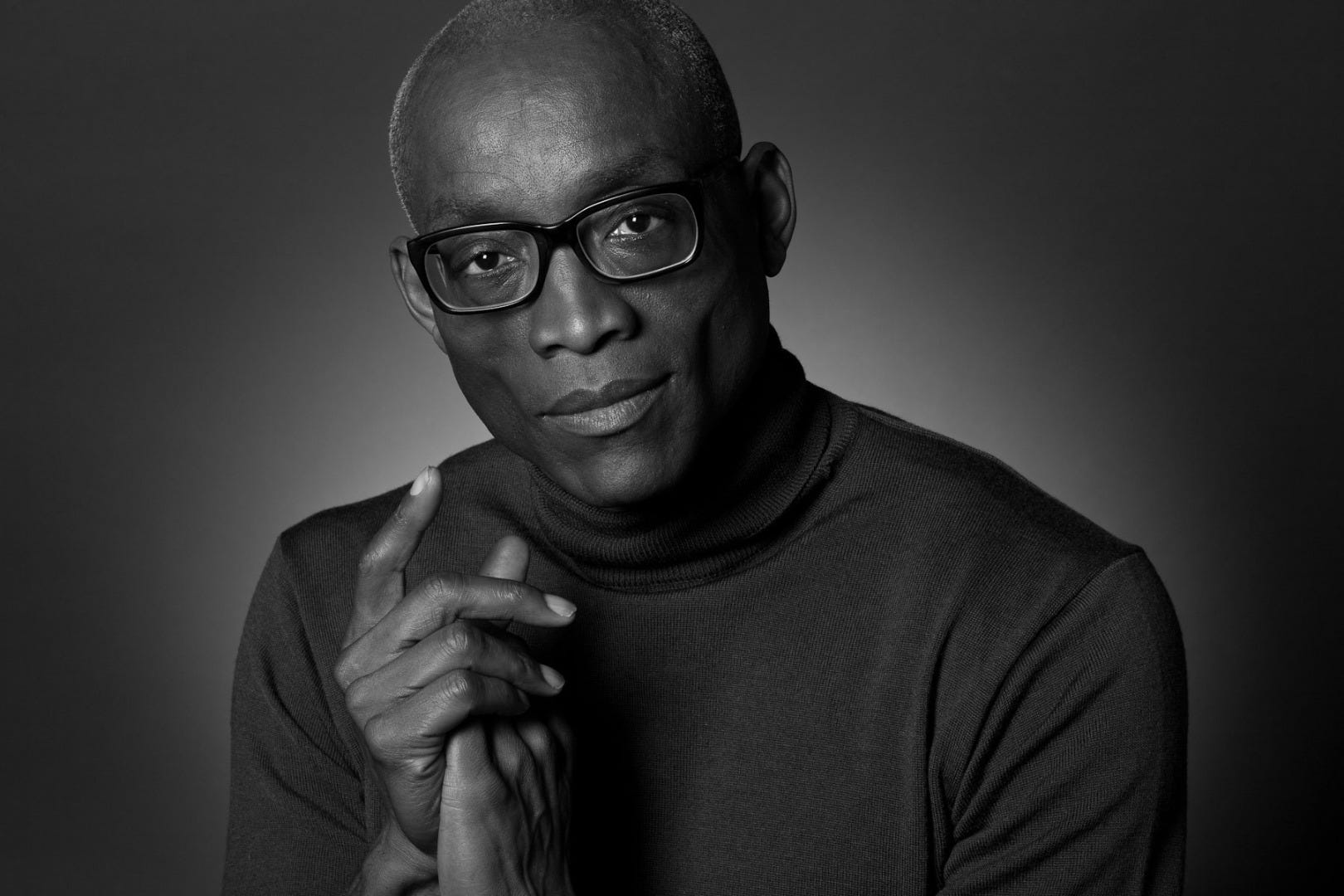
Jones wrote in the original 1994 program notes that the Survival Workshops: Talking and Moving about Life and Death form the basis of Still/Here. In notes penned 30 years later, Jones wonders if and how his work can transcend the era in which it was conceived.
As both a daughter mourning my mother’s death and a survivor of a recent series of strokes of no known origin, this art had a profound personal impact on me. I don’t have a terminal diagnosis, but I feel I exist in a mystery universe that could transform at any time. I can imagine death now. I have seen more people pass and have skirted close to mortality myself.
Jones’ company members, most of whom weren’t yet born when Still/Here debuted just after the AIDS era in 1994, were uniformly engaged in their subject matter despite their youth. Although as Jones says himself, mortality doesn’t change with the times, it isn’t subject to fashion. We either stand our ground in the face of it or we are swept away.
I recognized that sentiment in my mom. I think she lived 94 years in part because she was too stubborn to accept her own aging. She strived to live her life to the fullest, and I’m happy her death was swift. As for myself, I know more about what it takes to continue to live. I recognize that recovering from strokes has required as much mental as physical resilience. And I live with a constant recognition that I am lucky to be alive.
Watching Still/Here I could appreciate the beauty of the choreography and the dancers who brought it to life.
They don’t simply enact the workshop participants’ words. To me their movements, enhanced by Robert Wierzel’s amazing lighting design and the set and visual concept created by Gretchen Bender, slowly but surely resonated with my personal experiences and left me wondering how we can push aside the devastation of a terminal diagnosis and seize what remains of our lives with joy and gratitude.
I promised you a bit of old controversy. Another extremely relevant facet to this work was a 1994 article Arlene Croce published about it in The New Yorker. Croce hadn’t seen Still/Here when she wrote her now infamous article Discussing the Undiscussable. She criticized art that exploited what she called the creators’ victimhood, and told readers she didn’t plan to see Still/Here. Croce, one of, if not the most, influential 20th century dance writers, wielded a place of power. In 2024 Jones told New York Times dance critic Gia Kourlas that reading her critique felt like having hot water thrown on him.
I didn’t have the fortune to see Still/Here in 1994. but I don’t know if I would have received this artwork the same way 30 years ago. Yes, friends had died of AIDS, like Jones’ life and artistic partner Arnie Zane, or suffered from ongoing HIV infection. Although I had seen a lot, I thought differently about death at age 40 than I do now at almost 72.
Friends and family had left this earth, but living through both the AIDS and COVID eras gave me a closer acquaintance with death and a better understanding of life. I also developed a better understanding of how I wanted to live and die. Death and taxes. And love and joy. These are the constants of being alive.
As Jones writes now, death doesn’t change with the fashions, and we can’t escape it — at least not yet. I watched Still/Here last week with the shadows of grief and uncertainty clouding my view of the future. But this performance reaffirmed my commitment to the power of artists to reframe even the finality of death as a doorway to the possibility of joy and gratitude. Thanks Bill T. Jones/Arnie Zane company for opening a renewed conversation with us.